Fengyang Video Call Notes: Clinical Use of Xiao Chai Hu Tang
May 13, 2026, Wednesday
Notes from Dr. Wu Mingjie's Video Conference Call
Lecturer: Dr. Wu Mingjie, PhD, TCM
Minutes Compiled by: Dr. Chen Qingzhen
Topic: Clinical Application of the Classic Formula Xiao Chai Hu Tang(Minor Bupleurum Decoction)
Original Text from Article 96 of Zhang Zhongjing's Shang Han Lun(Treatise on Cold Damage Diseases, Eastern Han Dynasty):
"In cold damage of five or six days, or in wind strike, if there is alternating chills and fever, distress and fullness in the chest and hypochondria, a quiet and withdrawn state with no desire to eat or drink, heart vexation with a tendency to vomit—or perhaps chest vexation without vomiting, or thirst, or abdominal pain, or hardness and fullness under the hypochondria, or palpitations and difficult urination, or absence of thirst with slight fever, or coughing—Xiao Chai Hu Tanggoverns all these cases."
Core Interpretation:
This article discusses the symptoms and treatment of Shaoyang disease (a half-exterior, half-interior syndrome). The core pathogenesis is pathogen stagnation in the Shaoyang, impaired pivot mechanism, and disharmony between the gallbladder and stomach.
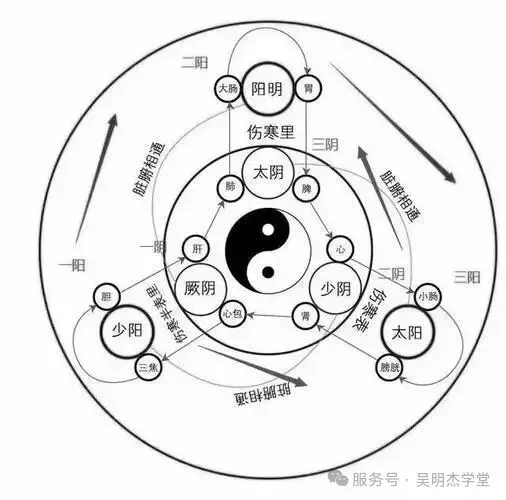
🌞 TCM Interpretation of Taiyang and Shaoyang 🌿
Symptoms:
Alternating chills and fever (往来寒热): Pathogen and healthy qi battling in the Shaoyang.
Distress and fullness in the chest and hypochondria (胸胁苦满): Stagnation of Shaoyang meridian qi.
Quiet/withdrawn state and no desire to eat (默默不欲饮食): Gallbladder qi invading the stomach.
Heart vexation and tendency to vomit (心烦喜呕): Gallbladder fire disturbing the heart; stomach qi rebelling upward.
Modifications based on accompanying symptoms:
Vexation in the chest but no vomiting:Heat accumulating in the diaphragm. Remove Banxia and Renshen; add Gualou Shi (Trichosanthes Fruit).
Thirst:Fluid impairment. Remove Banxia; add Tianhuafen (Trichosanthes Root).
Abdominal pain:Wood overcoming earth (liver overacting on spleen). Add Baishao (White Peony).
Hardness and fullness under the hypochondria:Qi stagnation and phlegm coagulation. Add Muli (Oyster Shell).
Palpitations and difficult urination:Internal water/fluid retention. Add Fuling (Poria).
No thirst with slight fever:Exterior pathogen not yet cleared. Remove Renshen; add Guizhi (Cinnamon Twig).
Coughing:Lung cold with reversed flow of qi. Remove Renshen, Dazao, and Shengjiang; add Wuweizi (Schisandra) and Ganjiang (Dried Ginger).
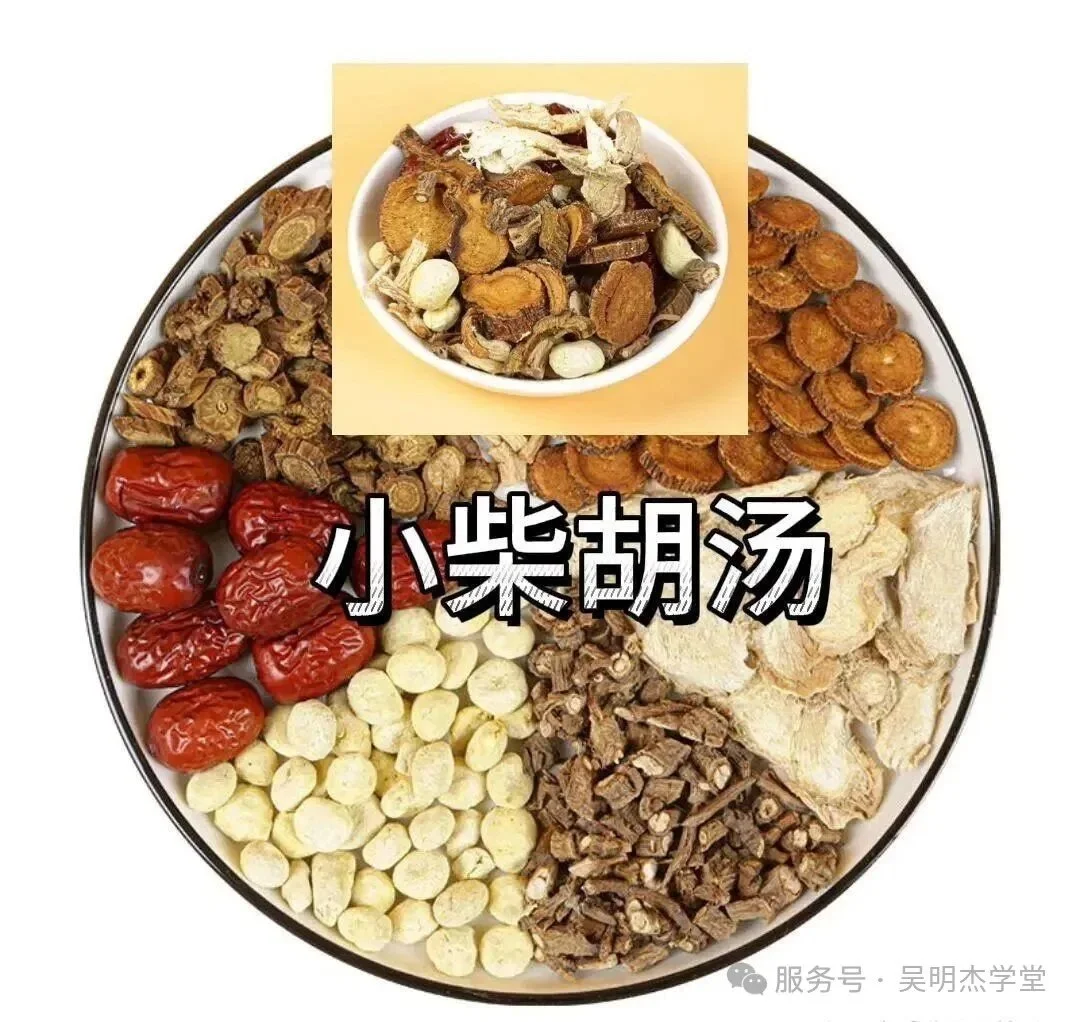
Composition of Xiao Chai Hu Tang:
Chaihu (Bupleurum), Huangqin (Scutellaria), Banxia (Pinellia), Renshen (Ginseng), Shengjiang (Fresh Ginger), Dazao (Jujube), and Gancao (Licorice).
Functions: Harmonizes the Shaoyang, regulates and unblocks the pivot mechanism.
Classical Administration: Decoction instructions specify straining and re-boiling the herbs. Take warm, three times a day.
Original Text from Article 263 of Shang Han Lun:
"The governing symptoms of Shaoyang disease are a bitter taste in the mouth, dry throat, and dizzy eyes."
Brief Interpretation:
This is the diagnostic hallmark of Shaoyang disease. Core pathogenesis: Pathogen stagnated in Shaoyang, gallbladder fire flaring upward.
Bitter taste: Gallbladder fire rebelling upward, causing bile overflow.
Dry throat: Fire scorching body fluids, depriving the throat of moisture.
Dizzy eyes: Gallbladder fire rising along the meridian to disturb the clear orifices (eyes).
Dr. Wu Mingjie’s 40 Years of Clinical Experience:
"If you grasp the two key features—a bitter taste in the mouth and a wiry pulse (xian mai)—you can prescribe Xiao Chai Hu Tangas the sovereign remedy to conquer various stubborn, chronic, and complicated diseases. It works every time."
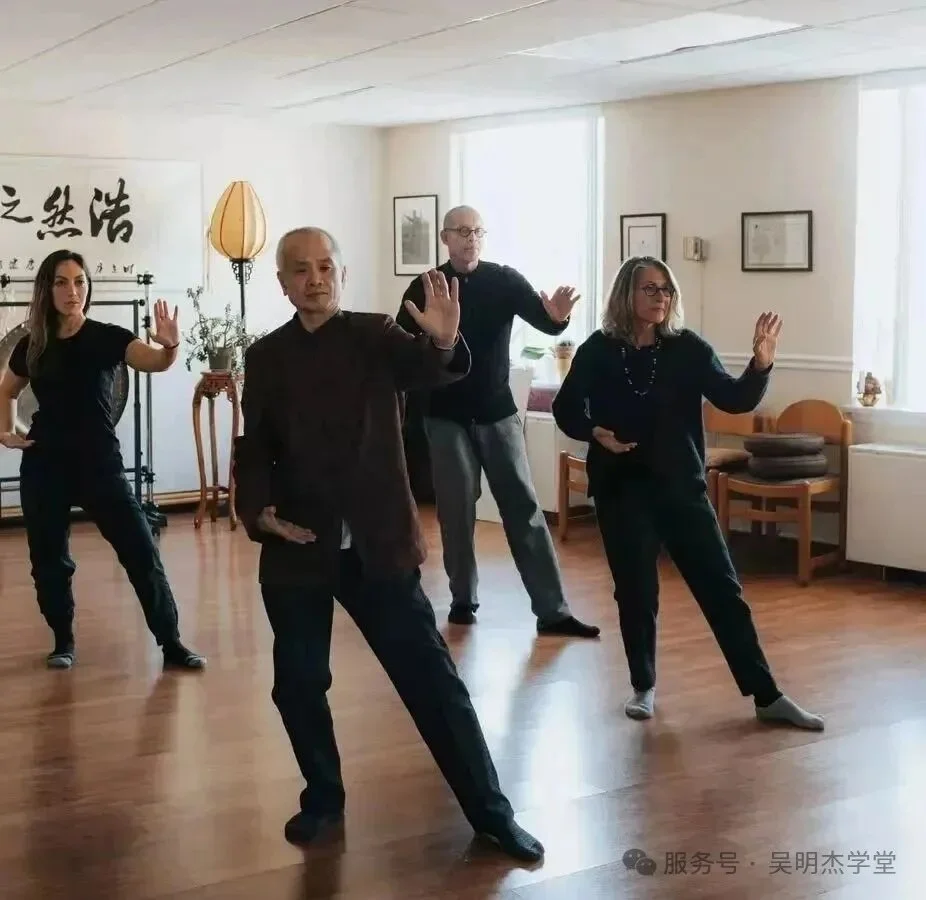
Fengyang Tai Chi and Health Preservation
In the Chinese martial arts system, Tai Chi belongs to the category of Internal Martial Arts (Neijiaquan).
Internal Martial Arts: A broad system emphasizing the cultivation of qi, relaxation, intention (mindfulness), and the use of softness to overcome hardness.
Tai Chi: A specific form of internal martial art focusing on health, balance, Yin-Yang theory, meditation, and movement. "Tai Chi" is the common English name.
Practicing Tai Chi can enhance the body's internal qi. In daily life, one should practice Tai Chi continuously to solidify foundational skills, such as Push Hands (Tuishou), Free Hands (Sanshou), and Tai Chi Standing Meditation (Zhan Zhuang).
The principle of daily Tai Chi practice is the same as the principle of treating patients: We need consistent daily practice. This is the key; it is more effective than book knowledge alone.
We practice the "Three Ts" of Fengyang TCM and integrate them into our lifestyle. Simultaneously, we promote this to our patients, encouraging them to practice it in their lives.
Fengyang Daoist Medicine's 3T Advantage Products:
Tui Na (includes massage, acupuncture, gua sha, cupping, etc.) + Tai Chi (includes Tai Chi, qigong, health exercises, Zen meditation, etc.) + Tea (includes tea ceremony, Chinese herbal medicine, diet therapy, etc.).
Fengyang Daoist Medicine: Seven parts nurturing, three parts treating.
Beyond health preservation, the Fengyang 3T approach is crucial for regulating the spirit and emotions, achieving the unity of mind and body.
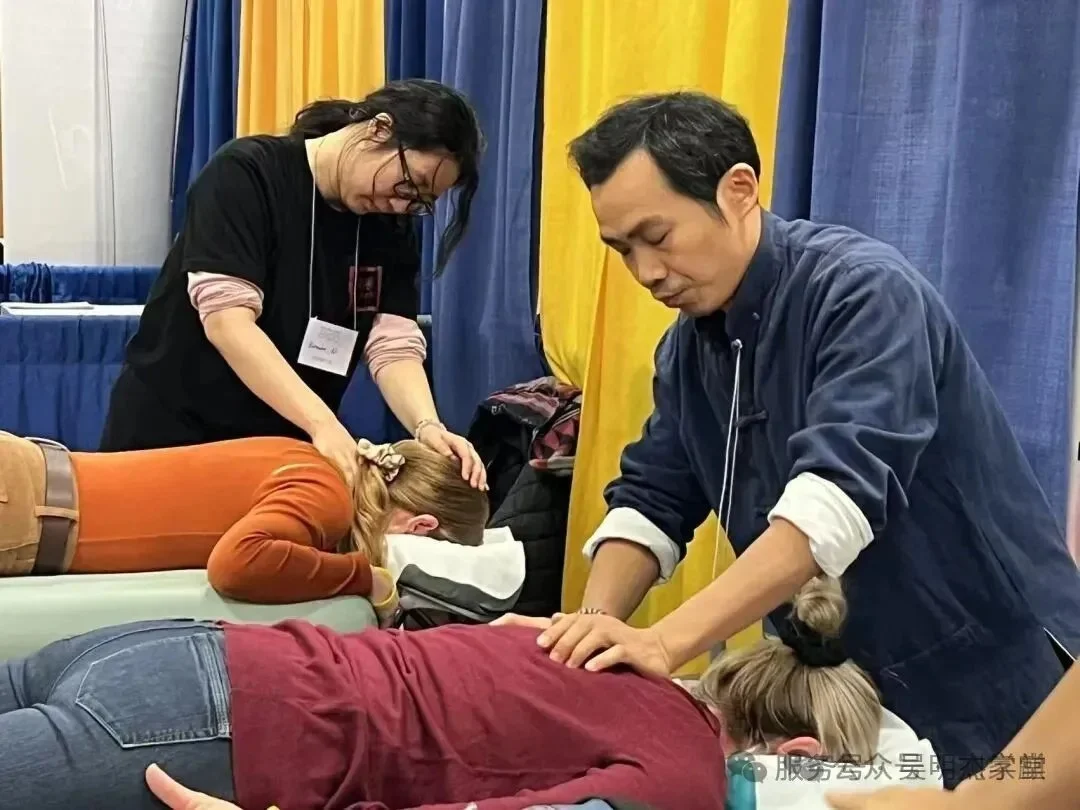
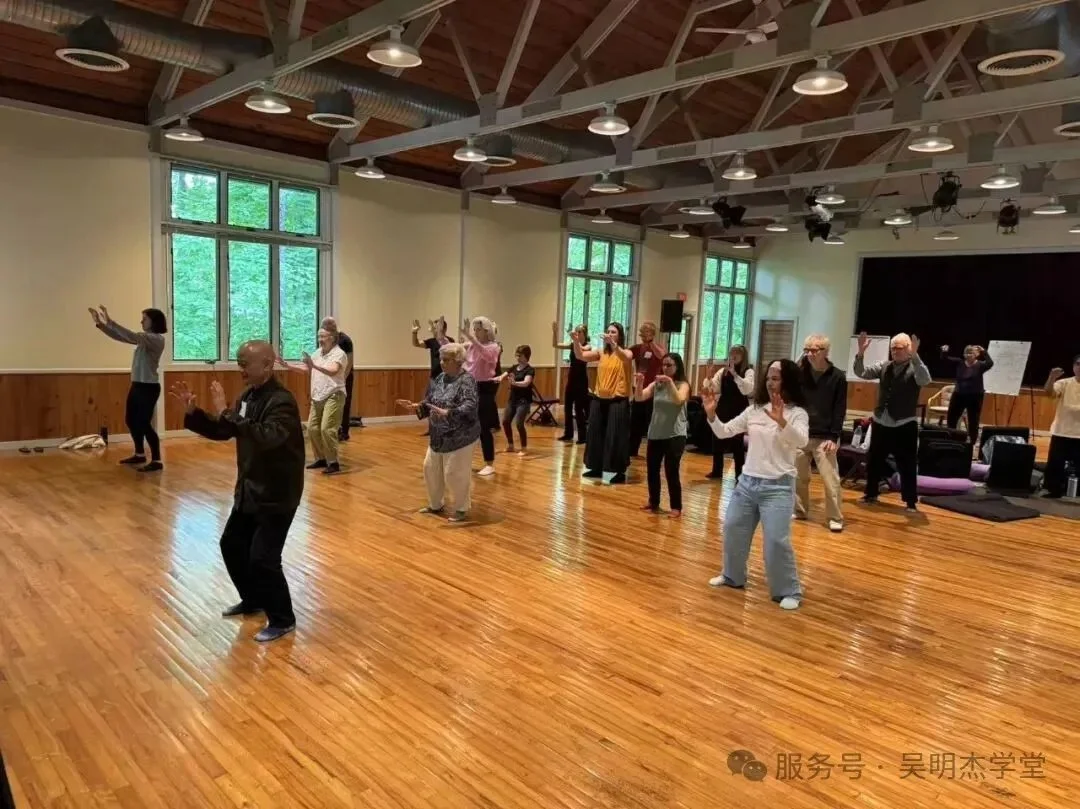
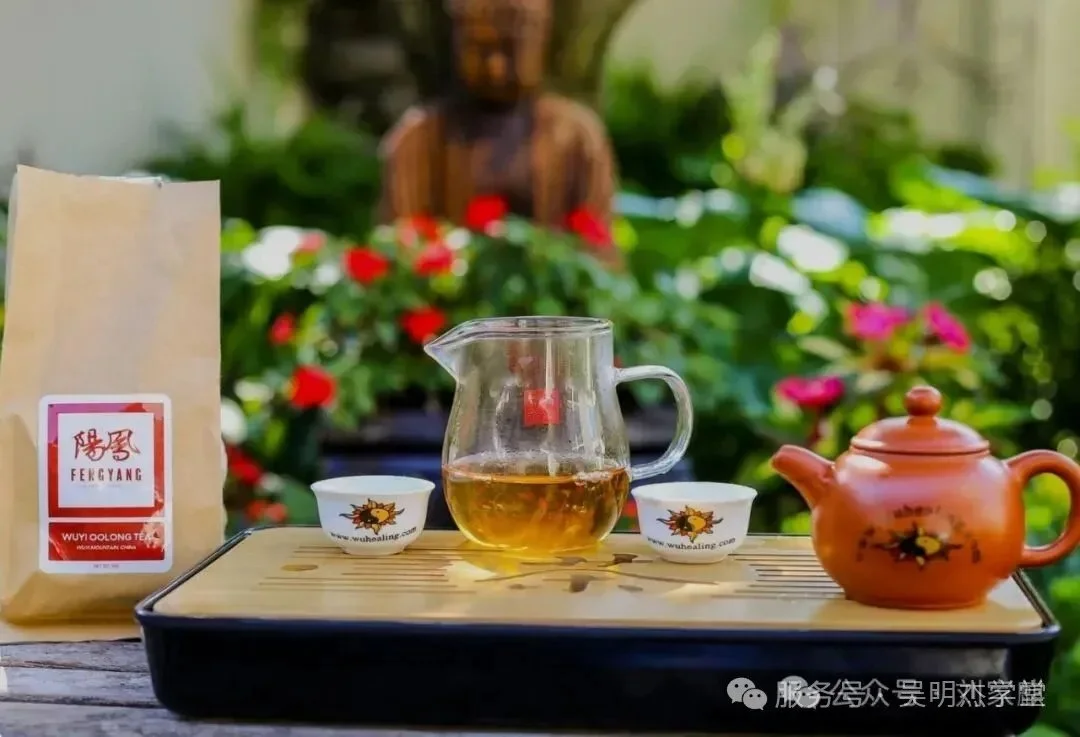
Fengyang Tui Na: Unblocks meridians, expels pathogens, strengthens the body's resistance, and regulates the internal organs.
Fengyang Tai Chi: Boosts qi and raises yang, balances yin and yang, and unifies spirit and body.
Fengyang Tea Ceremony: Medicine and tea share the same origin; entering the Dao through tea; the oneness of tea and Zen... following the natural way, achieving tranquility and far-reaching goals.
The Dao follows nature; governance through non-action.
When treating patients, we must strike directly at the root of the problem and regulate the fundamental cause. Regardless of what happens externally—whether it is war or chaos—we remain relaxed, seek the root cause, resolve the imbalances, and thus help patients restore their health.
As physicians, we must protect our own "True Qi" (Zhen Qi). True Qi relates to health, vitality, and disease resistance. By practicing Tai Chi, we keep our bodies, cores, and True Qi strong.
We establish relationships of trust with our patients. We do not fear diseases, because fear harms the body and invites illness. Nor should we fear treating patients. If we are afraid, we cannot provide the best treatment. Be fearless during treatment and give your absolute best. Even if, after trying our best, a patient still passes away, we have improved their quality of life, and they will be grateful for our help.
How to Build a Clinical Practice System Through Knowledge Implementation
To build a practice system, you can start by treating family and friends. To build your reputation, you need experience and continuous practice.
Methods to establish a TCM herbal practice:
Start with one formula.
Practice it on 10 patients and gather feedback.
Truly understand this formula through hands-on practice.
It is better to truly master 10 formulas through practice than to learn 500 formulas from books without ever applying them.
Notes on Regulations in the US vs. China
US Regulations: TCM practitioners cannot make Western medical diagnoses (e.g., cancer). However, they can provide TCM diagnoses (e.g., Spleen dampness).
China Regulations: TCM practitioners can provide both TCM diagnoses and Western medical diagnoses.
No matter where we are, we can self-regulate and help our families.
Understanding the Wiry Pulse (Xian Mai)
The pulse feels taut and elastic, like a guitar string.
Understanding "Alternating Chills and Fever"
A sudden alternation between feeling hot and cold, or fluctuating repeatedly.
Manifestations of Shaoyang Headache
Headaches occurring primarily on the sides of the head (temples/side of the forehead).
Two Examples of Shaoyang Diseases Treatable with Xiao Chai Hu Tang:
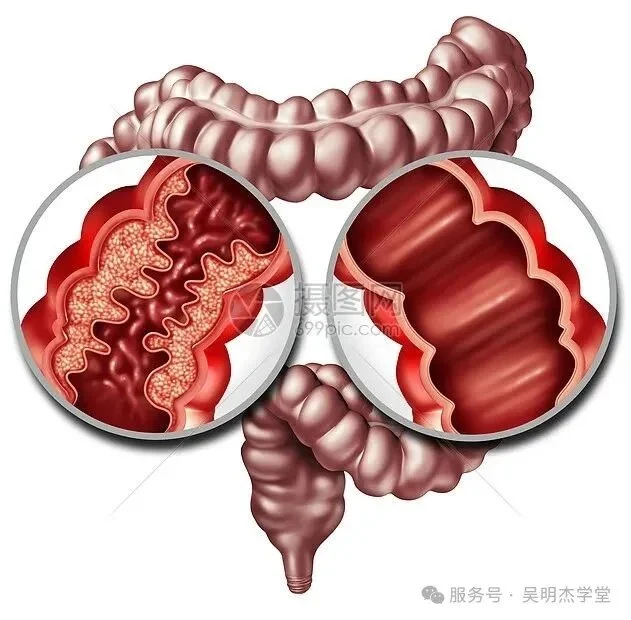
Crohn’s Disease and Colitis.
Both involve lesions and inflammation. Colitis mainly occurs in the colon and rectum, while Crohn's can affect the entire digestive tract. Crohn's usually has a longer course, more significant pain, and is generally more severe. Colitis can also be chronic, but Crohn's is overall more serious.
In Western medicine, lesions are sometimes surgically removed. However, since the root cause is not addressed, the lesions often return. The root cause may include dietary factors, such as the intake of wheat, dairy, and sugar. One of Dr. Wu's patients recovered gradually and saw their issues disappear after stopping the consumption of wheat, dairy, and sugar products.
How to Use Chaihu (Bupleurum)
Depending on the condition, we need to adjust the dosage of Chaihu.
Chaihu is the monarch herb (jun yao) in Xiao Chai Hu Tang. Its function is to raise yang qi, improve qi movement, and direct qi to flow upward.
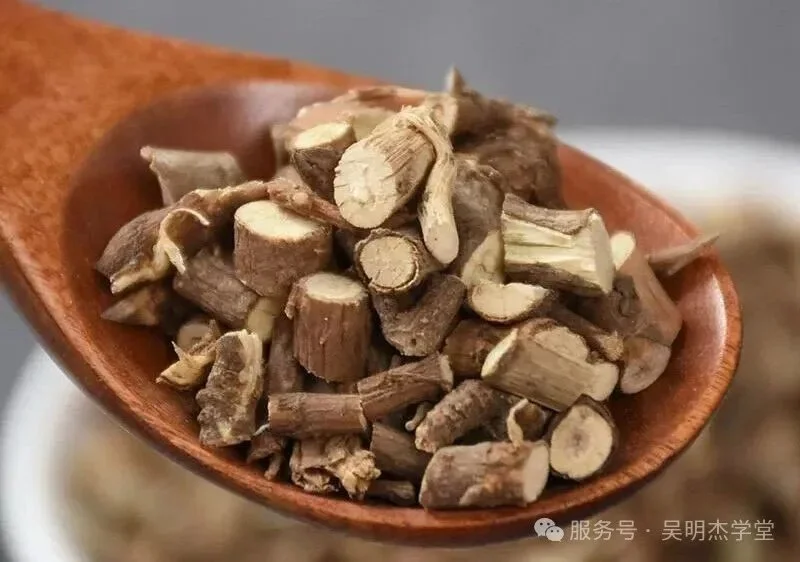
Based on the condition, the dosage of Chaihu varies:
High Dosage
Symptoms:Migraines, alternating chills and fever, fever, requiring pain relief.
Dosage:20–30 grams daily.
Common Formulas:Xiao Chai Hu Tang.
Medium Dosage
Symptoms:Anxiety, emotional issues, liver qi stagnation.
Dosage:8–12 grams daily.
Common Formulas:Xiao Yao San(Free and Easy Wanderer Powder), Jia Wei Xiao Yao San.
Low Dosage
Symptoms:Chronic diseases caused by sinking yang qi or middle qi (e.g., Myasthenia Gravis, hernias, gastroptosis, uterine prolapse) and digestive issues (e.g., Crohn's, colitis).
Dosage:3–8 grams daily, often paired with Shengma (Cimicifuga) to raise yang.
Common Formulas:Sheng Xian Tang, Bu Zhong Yi Qi Tang.
Classic TCM Books
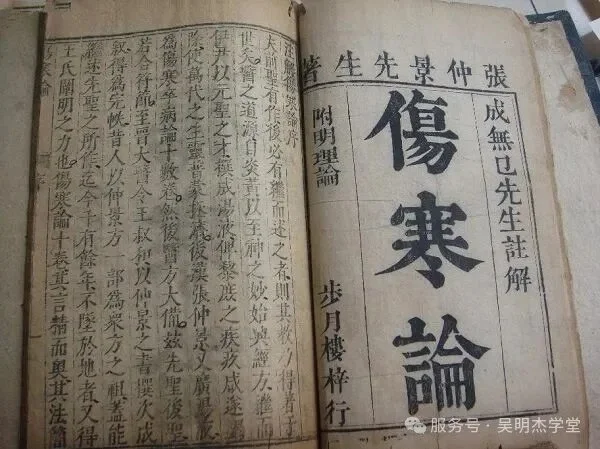
Book: Shang Han Lun(Treatise on Cold Damage Diseases)
An ancient Chinese medical classic written by Zhang Zhongjing during the late Eastern Han Dynasty (over 1,800 years ago). It is one of the "Four Great Classics" of TCM and has profoundly influenced traditional medicine ever since.
This lecture focused on Article 96. This chapter describes the symptomatic characteristics of the Shaoyang syndrome. When treating Shaoyang diseases, the key lies in the "pivot axis." The goal is to reach the core of the problem and dredge it. It is like flipping a light switch: once you touch the key point, the system restarts, and the blockage is cleared.
Different diseases may stem from the same root cause, which is the practical application of TCM's principle: "Treating Different Diseases with the Same Method" (Yi Bing Tong Zhi).
The Centurial Echo of Xiao Chai Hu Tang: Dr. Wu Mingjie’s 40-Year Clinical Insights
— The Shaoyang Pivot Resolves a Hundred Diseases; Bitter Taste & Wiry Pulse Work Like Magic
Compiled from Dr. Wu Mingjie's 40 years of clinical experience.
Xiao Chai Hu Tangconsists of Chaihu (Bupleurum) and Huangqin (Scutellaria) as the sovereign and minister herbs; Banxia (Pinellia) and Shengjiang (Ginger) as the assistant herbs; and Renshen (Ginseng), Dazao (Jujube), and Gancao (Licorice) as the envoy herbs. These seven ingredients mysteriously correspond to the numerological concept that "the Big Dipper governs death, and the Southern Dipper governs life."
My 40-year clinical practice proves that whenever the two symptoms of "bitter taste in the mouth" and "wiry pulse" are present—regardless of whether it is an external infection, internal damage, tumor, or immune disorder—it can be diagnosed as Shaoyang pivot dysfunction. Administering Xiao Chai Hu Tangwill yield guaranteed, rapid results. This is because the Shaoyang acts as the "pivot of the three yangs," functioning exactly like a door hinge: when the hinge turns smoothly, the door opens and closes freely; when the pivot mechanism is regulated, the qi of the internal organs flows naturally and unobstructed.
[New Clinical Applications] Five Classic Cases Witnessing the "Universal Formula for Shaoyang Diseases"
Case 1: Neurotic Abdominal Pain (USA, 1991)
Patient: Female, 70 years old. Recurrent abdominal pain and refusal to eat for 1 year.
Diagnosis: Wiry pulse, thin yellow greasy tongue coating. Symptoms worsened by emotional distress.
Pathomechanism: Liver qi invading the stomach, Shaoyang pivot dysfunction, stomach qi rebelling upward.
Treatment: Removed Shengjiang from the base formula; added Baishao (White Peony) 15g, Xiangfu (Cyperus) 10g.
Efficacy: Pain subsided after 7 doses; completely cured after 14 doses. No recurrence in a follow-up in 1993.
Scientific Validation: The Chaihu-Baishao herb pair regulates the GABA receptors in the brain-gut axis (Neurogastroenterology, 2022).
Case 2: Irritable Bowel Syndrome (Cambodia, 1991)
Patient: Male, 30 years old. Mucous stools with tenesmus for 12 years.
Diagnosis: Wiry left Guan pulse, weak Chi pulse, pale tongue with yellow greasy coating.
Pathomechanism: Shaoyang damp-heat descending into the large intestine, combined with Taiyin spleen deficiency and cold.
Treatment: Base formula plus Muxiang (Aucklandia) 6g, Baizhu (Atractylodes) 10g, Fuling (Poria) 15g.
Efficacy: Symptoms eliminated after 5 doses; recovery consolidated with Wu Mei Wan.
Modern Research: This protocol elevates intestinal sIgA levels (Frontiers in Immunology, 2023).
Case 3: Duodenal Ulcer (Cambodia, 1993)
Patient: Liu, Male, 26 years old. Epigastric pain radiating to the right ribs for 1.5 years.
Diagnosis: Wiry, rapid pulse; red tongue with yellow coating.
Pathomechanism: Shaoyang stagnant fire scorching the gastric collaterals.
Treatment: Base formula plus Huanglian (Coptis) 6g, Yuanshen (Corydalis) 10g, Danshen (Salvia) 15g.
Efficacy: Pain reduced after 7 doses; ulcer healed after 21 doses.
Endoscopic Evidence: Mucosal repair speed was 1.5 times faster than conventional Western medicine.
Case 4: Acute Jaundice Hepatitis (Cambodia, 1992)
Patient: Tang Ou, Male, 31 years old. Jaundice of skin and eyes with fever for 1 month.
Diagnosis: Wiry, rapid pulse; yellow greasy tongue coating.
Pathomechanism: Shaoyang damp-heat steaming, causing bile to overflow externally.
Treatment: Base formula plus Yinchen (Artemisia Capillaris) 30g, Dahuang (Rhubarb) 10g, Banlangen (Isatis Root) 15g.
Efficacy: Jaundice faded in 7 days; liver function returned to normal after 17 days.
Laboratory Evidence: ALT levels dropped 40% faster than standard treatment.
Case 5: Hepatitis C (Cambodia, 2004)
Patient: Ms. Ly. HCV infection contracted after a tattoo.
Diagnosis: Wiry pulse; deep red tongue (++) with thin yellow coating.
Pathomechanism: Pestilential toxin lurking in the Shaoyang blood level.
Treatment: Base formula plus Banlangen (Isatis Root) 15g, Banzhilian (Scutellaria Barbata) 10g, Mudanpi (Moutan) 10g.
Efficacy: Virus tested negative after 60 doses; no recurrence for 19 years.
Molecular Mechanism: This protocol inhibits HCV NS3 protease activity.
[Exploring the Mechanisms] The Scientific Essence of "Treating Different Diseases with the Same Method" using Xiao Chai Hu Tang
Common Pathomechanism: Shaoyang Pivot Dysfunction
Although the five cases above have different disease names, they all exhibited:
Core Indicators: Bitter taste in the mouth, wiry pulse.
Location Characteristics: Involving the liver, gallbladder, stomach, intestines, and triple burner.
Pathological Nature: Mixed cold and heat, intertwined deficiency and excess.
Three Major Therapeutic Axes in Modern Medicine
Neuro-endocrine Axis: Regulates the CRH-ACTH-Cortisol pathway.
Immune-inflammatory Axis: Balances Th1/Th2 cytokine storms.
Microbiota-gut-liver Axis: Improves communication between gut flora and the liver.
[Inheritance and Innovation] Viewing the Future of TCM Through Five Cases
Standardization of Pattern Differentiation: Establishing objective diagnostic criteria for "bitter taste and wiry pulse" (e.g., AI analysis of tongue images).
Dosage Form Reform: Developing Xiao Chai Hu Tangnanoparticles for acute emergencies (e.g., hepatitis shock therapy).
International Promotion: Establishing Shaoyang disease prevention and treatment demonstration sites in Belt and Road Initiative countries.
Dr. Wu Mingjie's Clinical Heritage Site
Revised simultaneously in New York, Phnom Penh, and Guangzhou (2023)
(This article is included in the WHO Traditional Medicine Case Library, Reference No. TM-2023-007)