Interpretation of a Proven Formula by TCM Master Deng Tietao: Don't Just Grin and Bear Urinary Stones—This Prescription Helps "Dissolve" and "Expel" Them
Deng Tietao’s Proven Formula for Urinary Stones
Integrating Chinese and Western Medicine to Soften and Drain
The "Chinese-Western Medical Dialogue" on Urinary Stones: It's Not Just About the "Stone," But That the "Internal Environment Has Gone Awry"
(1) "Shi Lin" (Stone Strangury) in TCM: Damp-Heat, Qi Stagnation, and Kidney Deficiency Are the Roots
In Traditional Chinese Medicine (TCM), urinary stones are referred to as "Shi Lin." Their formation is linked to three major factors:
Accumulation of Damp-Heat: Long-term consumption of spicy foods, staying up late, and insufficient water intake lead to Bladder Damp-Heat, causing urine to concentrate into "gravel"—like a "pond drying up and forming clumps."
Stagnation of Qi Flow: Emotional anxiety and prolonged sitting lead to sluggish Qi and blood circulation. When stones lodge in the urethra, they cause intense pain—the TCM principle of "pain arising from obstruction."
Spleen and Kidney Weakness: A weak Spleen fails to transport fluids properly, and a deficient Kidney lacks the power to expel urine. Stones cannot be expelled and are prone to recurrence, like a "silted river channel lacking water."
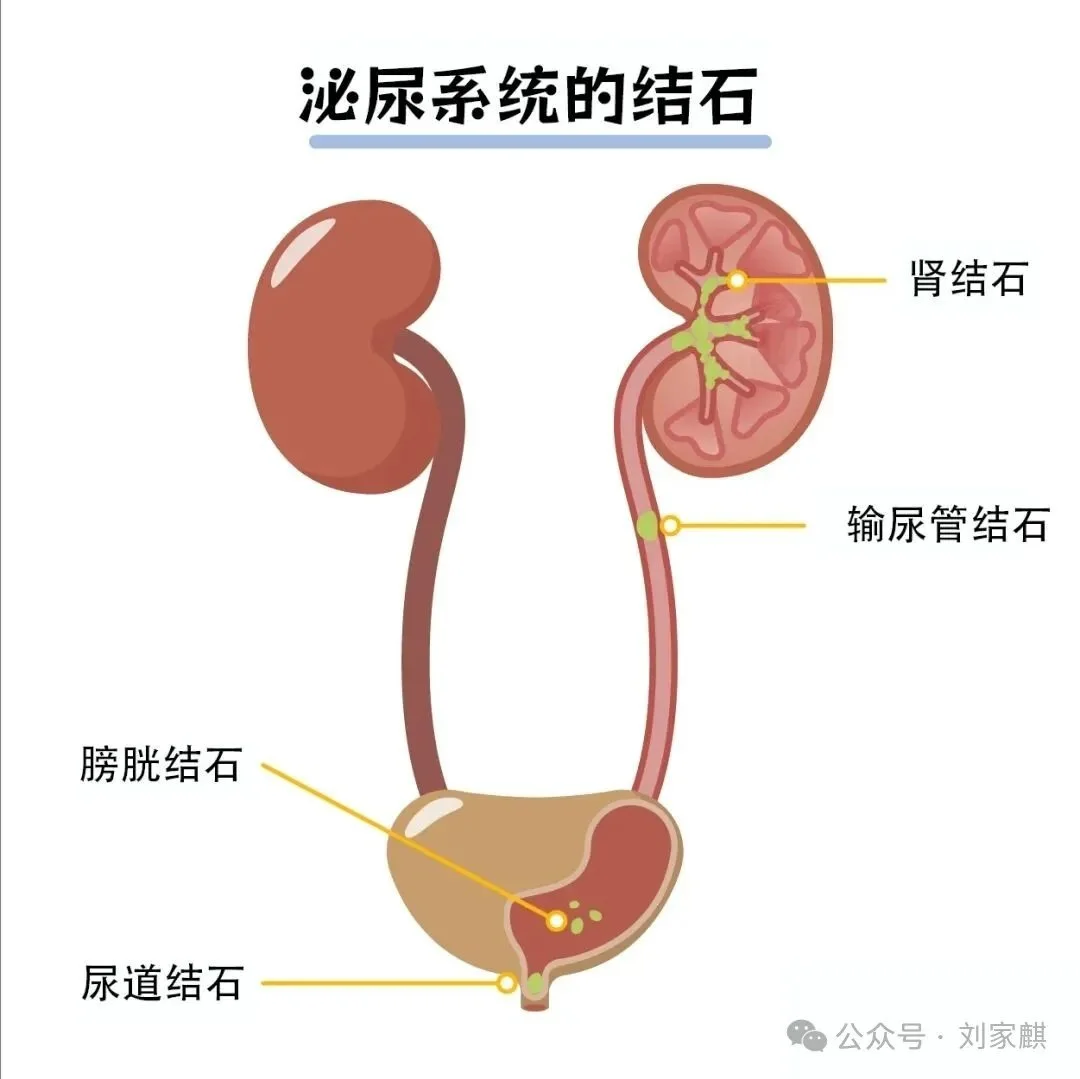
(2) The Western Medical Perspective: Stones Are a Signal of "Metabolic Imbalance"
Western medicine views urinary stones (kidney stones, ureteral stones, etc.) as products of metabolic abnormalities:
Calcium oxalate stones are the most common, related to high-oxalate diets (spinach, amaranth) and inadequate hydration.
Uric acid stones are mostly caused by high-purine diets (organ meats, beer), leading to uric acid crystal deposition.
When stone diameter exceeds 0.6 cm, they can lodge in narrow parts of the ureter, causing hydronephrosis and potentially damaging renal function.
The consensus between Chinese and Western medicine is that stones are not isolated "rocks," but rather a sign that the internal environment (damp-heat, metabolism) is problematic. Treatment must both "expel the stone" and "regulate the environment"—this is precisely the core philosophy of Master Deng’s formula.
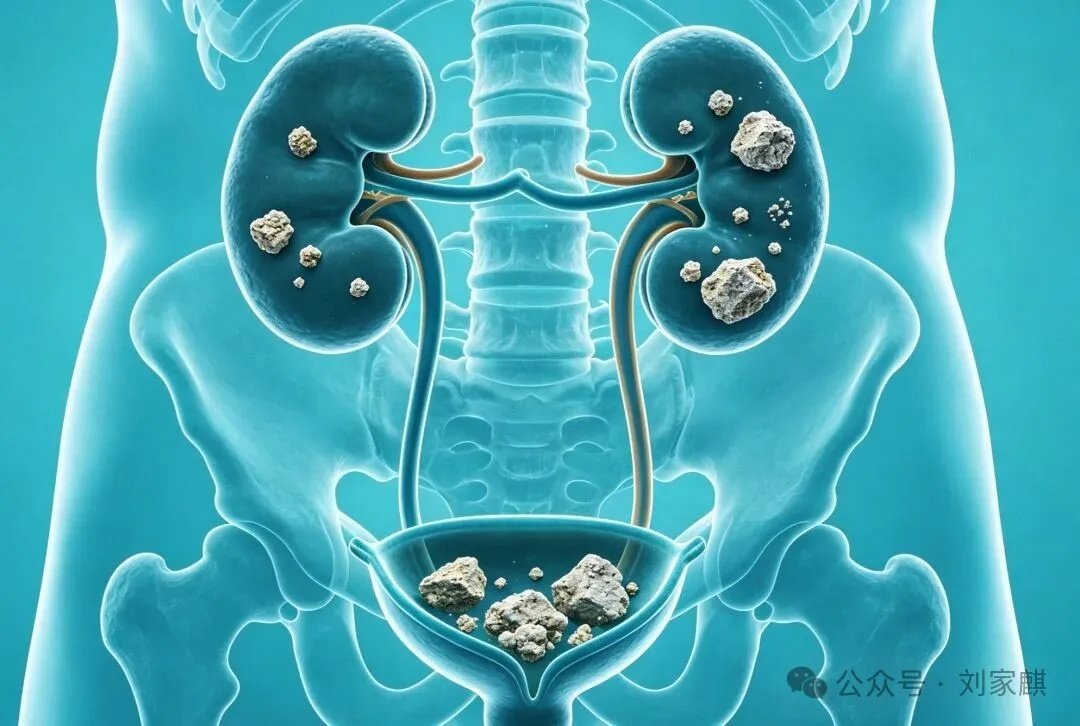
Analysis of Deng Tietao’s Proven Formula: 7 Herbs That Both "Dissolve Stones" and "Clear Waterways"
(1) The Base Formula:
Desmodium styracifolium(Jinqiancao): 30g
Rehmannia glutinosa(Shengdi): 15g
Aucklandia lappa(Guang Muxiang): 5g
Galli Gigeriae Endothelium(Jineijin): 10g
Lygodium japonicumspores (Haijinsha): 3g (taken as a powder mixed in warm water; or use Suiniu powder/Hujiaosha alternately)
Glycyrrhiza uralensis(Gancao): 3g
Akebia trifoliata(Mutong): 9g
(2) Formula Analysis: Each Herb Is a Member of the "Stone-Expelling Team"
Jinqiancao (Desmodium): The "Main Force" in expelling stones. Sweet, salty, and slightly cold. It clears heat, promotes dampness, and reduces swelling in the urinary tract—acting like a "river dredger." It dilutes urine and softens the edges of stones. Modern research shows it increases urine volume and promotes ureteral peristalsis.
Jineijin (Chicken Gizzard Membrane): The "Stone-Dissolving Expert." Neutral nature, sweet taste. Skilled at "breaking down stones," grinding them into finer fragments for easier expulsion. Folk medicine calls it "sandpaper for the organs," especially effective for tiny stones.
Haijinsha (Lygodium spores): The "Scavenger." Cold nature, sweet/salty taste. Acts like a "water flow booster," using urine to flush the urethra and carry stones out. Note:Must be taken as a powder (not boiled) to preserve active ingredients.
Guang Muxiang (Costus Root): The "Pain Regulator." Warm nature, bitter/spicy taste. Promotes Qi movement and stops pain, alleviating the "Qi stagnation pain" caused by lodged stones. In TCM, "when Qi flows, water flows"; it also promotes urination, indirectly aiding stone expulsion.
Shengdi (Raw Rehmannia): The "Firefighter" protecting the Kidneys. Cold nature, sweet/bitter taste. Clears heat, cools blood, nourishes Yin, and generates fluids, relieving "Lower Burner Heat" (e.g., painful/dark urination) and protecting Kidney Yin from damp-heat damage.
Mutong (Akebia Stem): The "Waterway Worker." Cold nature, bitter taste. Enhances diuresis to increase urine volume—like "increasing water flow to scour rocks." Caution:Use Sichuan Mutong(Akebia), keep dosage ≤9g to avoid kidney toxicity.
Gancao (Licorice): The "Binding Agent." Neutral nature, sweet taste. Harmonizes the properties of other herbs (preventing cold bitterness from harming the stomach), clears toxins, and reduces urethral inflammation.
The Logic of This Formula Is "Three-in-One":
Jinqiancao + Haijinsha + Mutong handle "Clearing" (promoting diuresis to open the stone-expelling pathway).
Jineijin + Jinqiancao handle "Dissolving" (softening and breaking stones to make them smaller and smoother).
Guang Muxiang handles "Moving" (promoting Qi to relieve pain and obstruction), while Shengdi handles "Protecting" (nourishing Yin and guarding the Kidneys).
It is like having a "dredging ship," a "crusher," and a "painkiller" all working together to tackle the stone problem comprehensively.
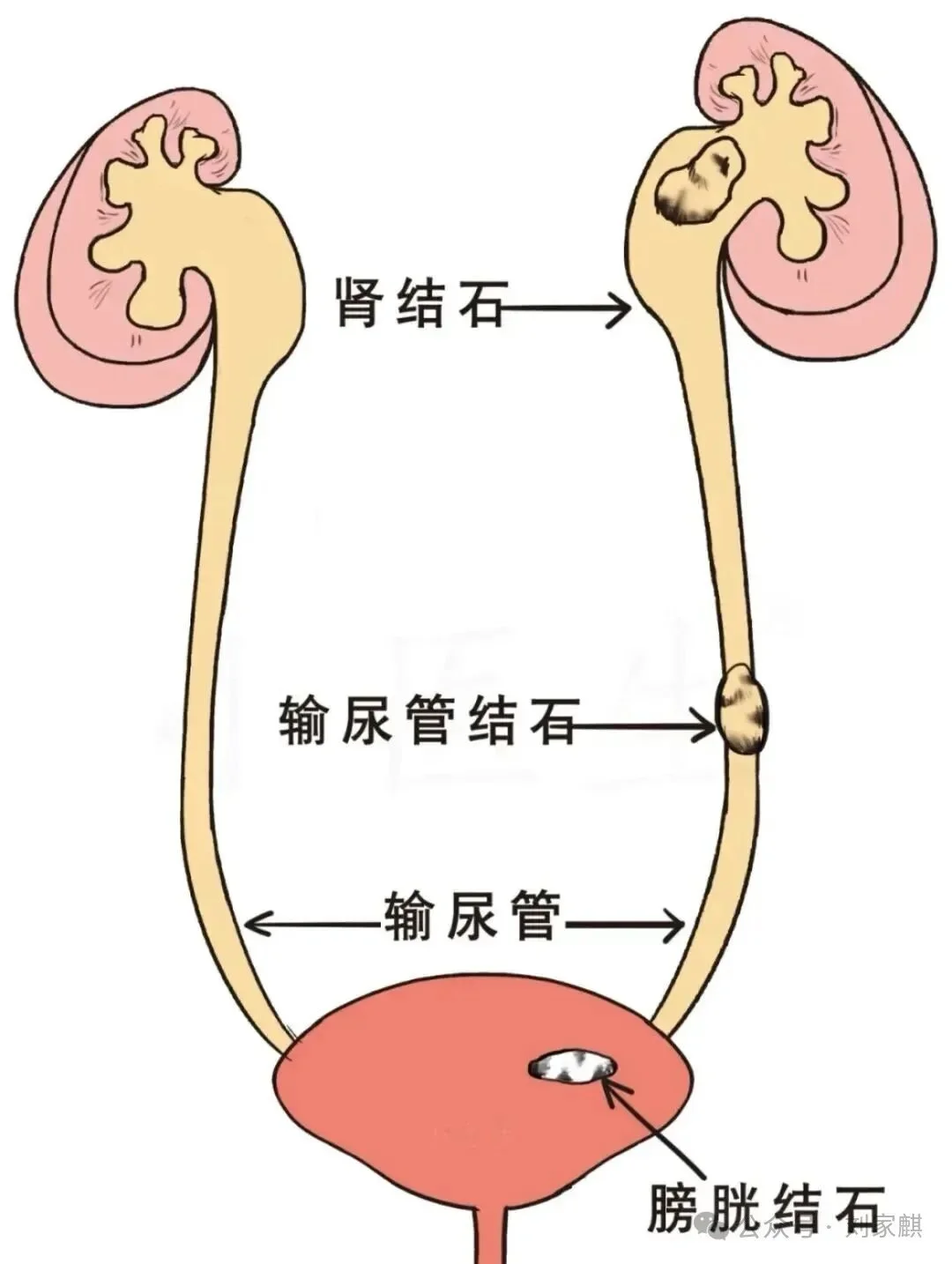
Syndrome Differentiation and Modification: Adjusting the Formula for Different Symptoms
Master Deng emphasized that "Shi Lin is not just one syndrome type" and requires adjustments based on symptoms:
Obvious dysuria/pain (urethral inflammation): Add Pteris multifida(Xiaoye Fengweicao) 24g and Phyllanthus urinaria(Zhenzhucao) 24g to enhance clearing heat, promoting dampness, and relieving strangury pain.
Hematuria (stones scratching the urethra): Add Imperata cylindricaroot (Baimaogen) 30g, Platycodon grandiflorus(Dandouchi) 10g, and Commelina diffusa(Sanye Renzicao) 30g. Baimaogen cools blood and stops bleeding; Sanye Renzicao promotes dampness and stops bleeding.
Qi deficiency/fatigue (insufficient expulsion power): Add Astragalus membranaceus(Huangqi) 30g to tonify Lung Qi and assist urination (TCM holds that the Lungs regulate water pathways; sufficient Lung Qi means strong urination).
Kidney Yang deficiency/chills (especially in elderly): Add Fu Gui (Aconitum carmichaelii/ Rougui) or use Fu Gui Ba Wei Wan (Kidney Yang tonic pill) alongside the base formula to warm and tonify Kidney Yang, enhancing the "Qi transformation function" (like adding power to a "drainage pump").
Adjuvant Therapies: "Cupping + Daily Regulation" Recommended by Master Deng
(1) Emergency Pain Relief: Cupping for Renal Colic
When stones cause severe low back or abdominal pain, temporary cupping can be used:
Low back pain / Upper abdominal pain: Place the cup over the tender point in the lower back (slightly downward).
Lower abdominal pain: Place the cup over the tender point in the lower abdomen. Leave for 10-15 minutes.
Principle:Cupping promotes local blood and Qi circulation, relieving ureteral spasm (smooth muscle spasm in Western terms). This reduces pain and may help the stone shift slightly. Note:Seek medical attention promptly after cupping; this is not a substitute for formal treatment.
(2) Daily Regulation: 3 "Stone-Expelling Habits"
Hydration Matters: Drink 2000-2500ml of warm water daily (no soda). Drink small amounts frequently (e.g., 200ml/hour). Avoid drinking too much at once. Drink 300ml on an empty stomach in the morning and 200ml before bed to dilute urine.
Dietary "Pitfalls":
Calcium Oxalate Stones:Limit spinach, amaranth, almonds (high oxalate); don't overdo milk or calcium supplements.
Uric Acid Stones:Limit organ meats, beer, seafood (high purine).
All Stone Patients:Reduce salt (≤5g/day); salt increases calcium excretion, promoting stone formation.
Moderate Jumping: Patients with stones in the lower calyx of the kidney can jump rope for 10 minutes daily (50 jumps per set, 2 sets) to use gravity to promote movement. However, if stone diameter >0.6cm or there is obstruction, avoid vigorous exercise to prevent impaction.
Integrated Chinese and Western Medicine: When to Use Herbs, When Must Surgery Be Done?
(1) Situations Suitable for Deng’s Formula
Stone diameter <0.6cm (confirmed by B-ultrasound), smooth surface, no urinary obstruction.
Stone located in the kidney or upper ureter, not causing severe hydronephrosis.
Post-operative prevention of recurrence (especially calcium oxalate, uric acid stones).
(2) Situations Requiring Immediate Western Medical Intervention
Stone diameter >0.6cm, or irregular shape (e.g., staghorn calculus).
Stone lodged in the ureter causing hydronephrosis (B-ultrasound showing pelvic separation >1cm).
Presence of high fever or anuria (may indicate severe infection or renal impairment).
Anecdote:A patient used Master Deng’s formula for 2 weeks and passed a 0.5cm kidney stone. He said: "At first, the pain had me rolling on the floor. After 3 days of the herbal tea, the pain lessened. Later, while urinating, I felt a 'clunk' and the stone came out!" Conversely, another patient delayed treatment, allowing a 0.4cm stone to grow to 1.2cm, ultimately requiring surgery—timely checks and syndrome-based medication are key.
Physician’s Tip
As a gastrointestinal surgeon, I often remind patients: Treating urinary stones is like "water control"—TCM is "dredging the river channel," while Western medicine is "blasting or extracting the rock." Combining both yields the best results.
Master Deng’s formula is brilliant because it "treats the stone while regulating the environment," but it must be used under professional guidance: First, get a B-ultrasound to confirm stone size and location, then modify the prescription based on constitution, and have regular follow-ups (B-ultrasound every 2 weeks) to observe stone movement.
Remember: Stones are not scary; what is scary is "grinning and bearing it" or "treating blindly." With timely intervention, most small stones can be successfully expelled through integrated Chinese and Western medicine.
Have you or someone around you had experience with stones? How was it resolved? Share in the comments~
Disclaimer: This article is for health science popularization only and does not constitute any medical diagnosis, treatment, or medication advice. If you feel unwell, please seek medical attention at a formal medical institution promptly.

Author Introduction of This Article
Liu Jiaqi is a senior disciple of Dr. Wu Mingjie of Fengyang Taoist Traditional Chinese Medicine. He graduated with a master's degree in Surgery from Harbin Medical University. Currently, he serves as Chief Physician and Associate Professor of Gastrointestinal Surgery at Beihai People's Hospital, and is also a Lecturer at Guangxi Medical University. He has long been engaged in integrated traditional Chinese and Western medicine treatment for gastrointestinal and anorectal diseases, and is committed to inheriting and promoting Fengyang Traditional Chinese Medicine culture to bring health and happiness to more patients.