Clinical Experience Sharing by Dr. Wu Mingjie on the Long-Term Integrated Management of Cardiac Valve Insufficiency with the Method of Augmenting Qi and Activating Blood Circulation as the Core
Abstract: This article summarizes a ten-year clinical observation: employing a modified Yangxin Decoction (base formula with added Honghua, Danshen, and Sanqi) and, based on syndrome differentiation, combining it with Zhenwu Decoction for patients presenting with edema, using a standardized treatment course (continuous administration for three months, repeated after a seven-day interval) for the long-term management of patients with cardiac valve insufficiency of the Qi Deficiency and Blood Stasis type. The results indicate that this integrated management model can effectively alleviate patient symptoms such as palpitations, shortness of breath, and arrhythmia, normalize electrocardiogram findings, and significantly improve quality of life during the ten-year follow-up period, supporting patients in achieving a long, self-sufficient lifespan. This article aims to explore the role of this regimen in "symptom control and compensation maintenance," providing a practical paradigm and theoretical reference for the integrated management of chronic structural heart disease.
Keywords: Cardiac Valve Insufficiency; Qi Deficiency and Blood Stasis Syndrome; Yangxin Decoction; Zhenwu Decoction; Method of Augmenting Qi and Activating Blood Circulation; Integrated Traditional Chinese and Western Medicine; Long-Term Management
---
I. Introduction: When Structural Heart Disease Encounters the Syndrome of Qi Deficiency and Blood Stasis
Cardiac valve insufficiency is a definitive structural heart disease. The treatment path in modern medicine is clear, focusing on pharmacological load reduction and surgical repair. However, in clinical practice, a significant number of patients remain in the interval of "requiring intervention but not yet meeting surgical indications" or "experiencing residual symptoms post-surgery." Their manifestations such as palpitations, shortness of breath, fatigue, and purplish sublingual collaterals closely align with the Traditional Chinese Medicine (TCM) syndrome of "Qi Deficiency and Blood Stasis"—where insufficiency of heart Qi leading to weak propulsion is the root, and sluggish blood flow causing obstruction of the heart vessels is the branch.
Confronted with this clinical常态, we are prompted to consider: Can TCM, within the solid framework of modern medicine, provide stable support for the long-term functional maintenance and quality of life improvement for such patients? Based on over a decade of collaborative follow-up integrating Chinese and Western medicine, we have explored a standardized TCM treatment regimen and management model using the method of "Augmenting Qi and Activating Blood Circulation," achieving encouraging long-term efficacy.
II. Clinical Protocol: Dynamic Syndrome Differentiation and Standardized Treatment Course
1. Core Therapeutic Principle and Basic Formula
Adhering closely to the core pathogenesis of "Qi Deficiency and Blood Stasis," the therapeutic principle of "Augmenting Qi and Nourishing Blood to Address the Root, Activating Blood and Resolving Stasis to Address the Branch" was established.
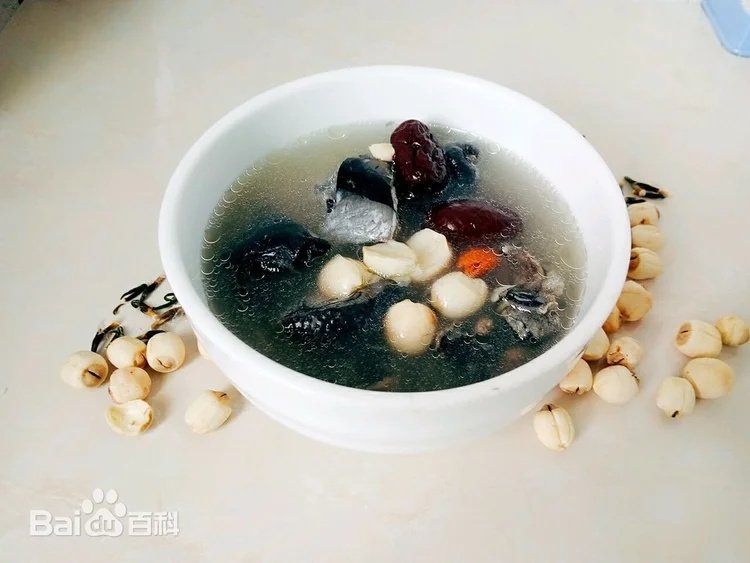
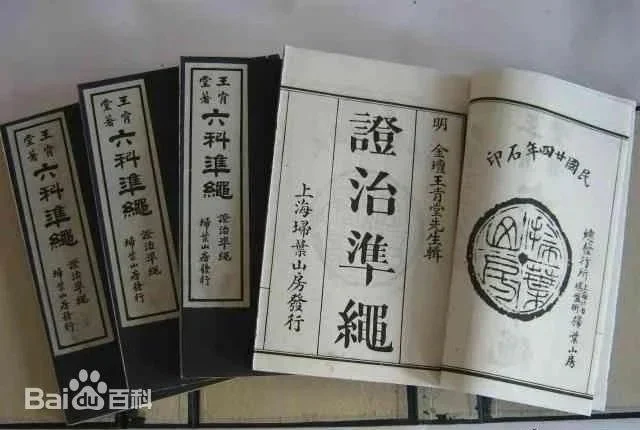
· Basic Formula: Yangxin Decoction from Standards of Diagnosis and Treatment serves as the base formula, aiming to augment Qi, nourish the heart, calm the mind, and relieve palpitations.
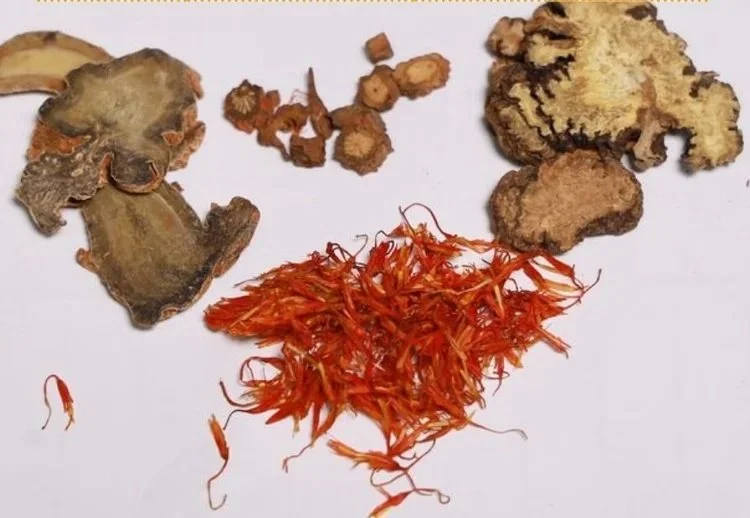
· Added Medicinals: The three key blood-activating medicinals Honghua (Carthami Flos), Danshen (Salviae Miltiorrhizae Radix et Rhizoma), and Sanqi (Notoginseng Radix et Rhizoma) are added to enhance the potency of unblocking vessels and resolving stasis. Modern pharmacological research confirms the specific effects of Danshen and Sanqi in areas such as resisting myocardial fibrosis and improving microcirculation.
2. Critical Syndrome Differentiation and Flexible Modification
The precision of syndrome differentiation is the prerequisite for efficacy. Among this case series, for the 2 patients presenting with lower limb edema, their pathogenesis was accurately identified as having developed into "Yang Deficiency of the Spleen and Kidney, Water Attacking the Heart" on the basis of Qi Deficiency and Blood Stasis. Therefore, Zhenwu Decoction from Treatise on Cold Damage was combined with the base formula to warm kidney Yang, assist Yang, transform Qi, and promote diuresis. This dynamic adjustment based on "disease-syndrome combination and formula-syndrome correspondence" embodies the essence of TCM individualized treatment.
3. Standardized Treatment Course and Long-Term Management Model
A clear treatment cycle was adopted:
· Course Definition: Continuous administration for three months constitutes one treatment course, followed by a seven-day drug holiday for observation and assessment before proceeding to the next course.
· Treatment Positioning: Emphasizing the necessity for "long-term administration." This is not indefinite medication but is based on a profound understanding of the nature of chronic structural heart disease requiring "long-term control." The treatment goals are positioned as "symptom control, maintenance of cardiac compensatory status, and improvement of quality of life."
· Integrated Framework: All patients were managed under the joint follow-up and supervision of cardiology specialists, ensuring严密 monitoring of changes in cardiac structure and function via modern medicine, with TCM treatment serving as the core modality for symptom management and functional regulation within this framework.
III. Efficacy Observations and Discussion on Mechanism of Action
1. Clinical Efficacy
· Symptom and Objective Index Improvement: In the vast majority of patients, symptoms such as palpitations, shortness of breath, and perceived arrhythmia基本 disappeared, and follow-up electrocardiograms returned to normal within one course (three months). This suggests the treatment not only alleviated subjective feelings but may also have reversed some functional electrophysiological disturbances.
· Nature of Efficacy and Disease Understanding: The phenomenon of symptom relapse普遍 occurring two months after discontinuation is crucial. It直观 verifies that the role of TCM in this regimen is "control" and "maintenance," not a cure for the structural lesion. This, in turn, clarifies the applicable scenario for this treatment: long-term management for the chronic, stable phase.
· Long-Term Outcome: With physician-patient cooperation and持续 intervention, over a ten-year follow-up, patients managed under this model exhibited a quality of life significantly better than expected with conventional management alone. Most were able to maintain self-care and achieved a lifespan接近 life expectancy (reaching around 100 years). This accomplishes the ultimate goal of chronic heart disease management.
2. Discussion on Mechanism of Action
The pronounced efficacy and sustained benefits of this regimen can be understood from multiple levels:
· Rapid Symptom Improvement Phase: Primarily achieved through Qi-augmenting medicinals enhancing myocardial contraction efficiency and blood-activating medicinals improving myocardial blood supply, thereby迅速 alleviating palpitations and shortness of breath.
· Long-Term Stable Compensation Phase (Key Mechanism): Long-term, intermittent-sequential administration may持续 inhibit the core pathological process of "myocardial remodeling" that leads to cardiac functional deterioration. Modern research suggests that components like Danshen in the formula may regulate signaling pathways such as SIRT1, resist myocardial fibrosis, and reduce oxidative stress, thereby protecting residual cardiac function and delaying the进程 of cardiac enlargement and failure.
· Systemic Holistic Regulation: The regimen simultaneously addresses the heart, blood, and water (treating Qi, blood, and water together), helping to comprehensively improve the internal environment, reduce the overall cardiac load, and lay the foundation for long-term stability.

IV. Discussion and Implications: Defining the Value Boundary of Integrated Medicine
This long-term practice provides clear insights for us:
1. Clarifies the Differentiated Value Positioning of TCM: In the field of structural heart disease, the core advantage of TCM lies not in altering anatomical structure but in卓越 "functional regulation" and "symptom management." Through methods like augmenting Qi and activating blood, it can effectively enhance cardiac compensatory capacity and maintain the patient's long-term functional status.
2. Confirms the Feasibility of a Standardized Treatment Course: The model of "three-month courses with seven-day intervals" provides an operable, easily-followed standardized reference for TCM treatment of chronic diseases, avoiding potential concerns and inconveniences associated with long-term uninterrupted medication.
3. Highlights the Multiplicative Effect of Collaboration: Cardiology specialists manage structural risks and surgical timing, while TCM practitioners are responsible for functional regulation and symptom control. Deep cooperation based on clear division of labor forms a全周期,全方位 care network for patients, ultimately achieving a clinical outcome where "1+1>2".
4. Raises Scientific Questions Worthy of In-Depth Investigation: How does this regimen specifically delay myocardial remodeling at the molecular level? What is its precise objective impact on patients' long-term survival rates? These await more rigorously designed prospective studies and the collection of more systematic biomarkers (such as NT-proBNP, dynamic echocardiographic parameters) for confirmation.
V. Conclusion
The integrated management model described in this article—centered on modified Yangxin Decoction, featuring dynamic syndrome differentiation, standardized treatment courses, and long-term management—provides an effective practical protocol for the chronic phase treatment of cardiac valve insufficiency of the Qi Deficiency and Blood Stasis type. It demonstrates that in the management of chronic structural heart disease, TCM can play an indispensable role as a "stabilizer," jointly supporting patients with modern medicine to achieve a longer and higher-quality life. It is hoped that this case can serve to stimulate further discussion, encouraging more colleagues to focus on and deepen the exploration of integrated management models for chronic heart disease.
Book overview
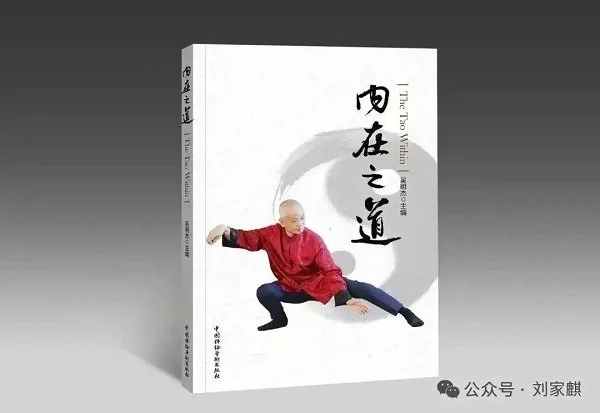
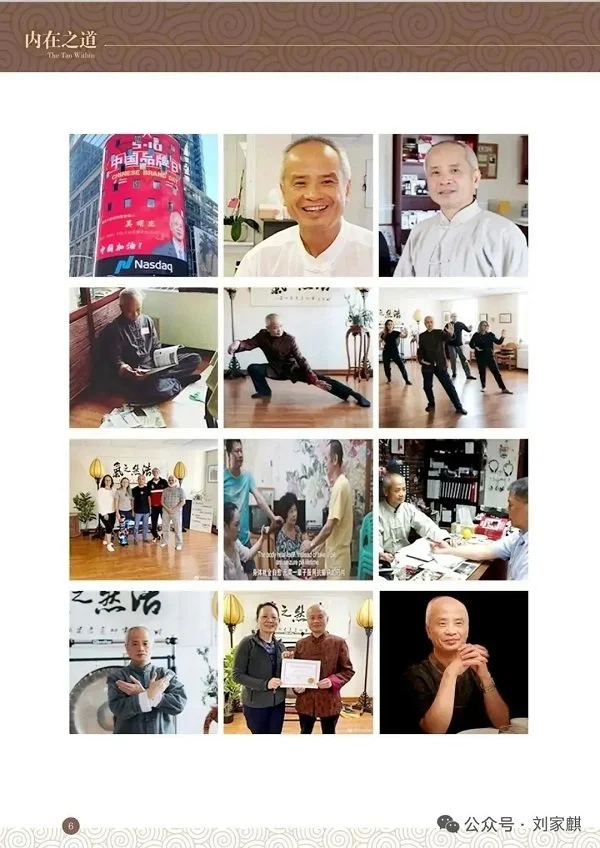
In "The Tao Within," the book embarks on a transformative journey of self-discovery, wisdom, and inner harmony. It shows how spirituality becomes a core element in our everyday lives and in maintaining our health. In the chaos of our modern world, we often find ourselves searching for meaning, purpose, and a deeper connection to our true selves.
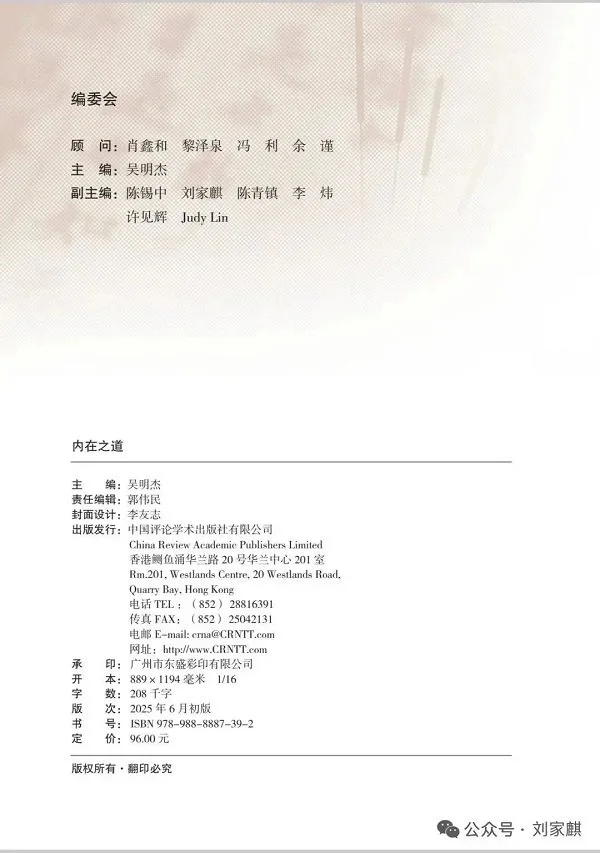
In this profound and insightful exploration, Authors, Ming Wu, Ph.D., and Judy Lin, guide us on a spiritual and medical path toward self-empowerment and unveiling the timeless wisdom of the Tao. As we witness more limitations on western medicine, this book is presenting.
order the Tao within click below llink order from amazon: a.co/d/6ryPrIz